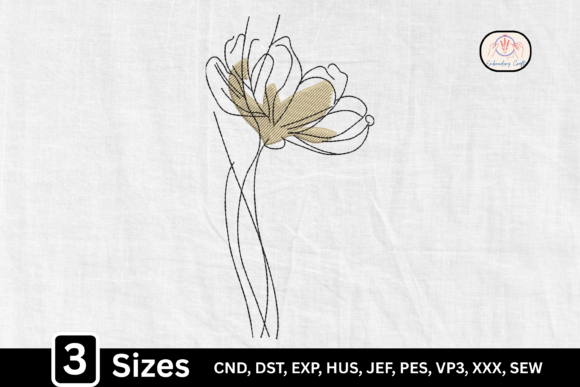
Minimalist Line Art Single Rose
A Designer’s Real-World Review Before the Craft Fair Booth
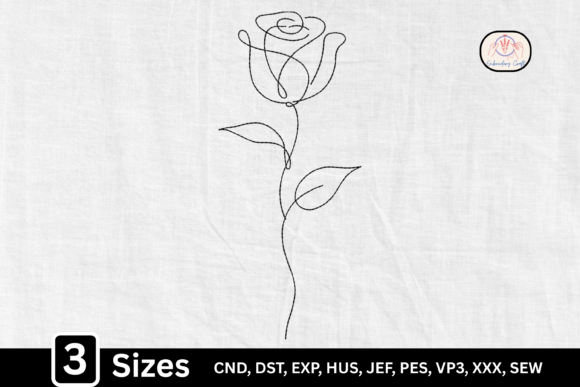
As an embroidery designer who’s prepped over 200 craft fair tables—and shipped thousands of embroidered tote bags, tea towels, and patches—I opened Minimalist Line Art Single Rose with one question: Will this stop someone mid-aisle? The answer? Yes—but only if placed right. This isn’t a loud, festive, or whimsical design. It’s quietly confident: modern, elegant, and deeply minimal. No shading, no petals overlapping, no filler stitches—just one continuous line tracing the quiet curve of a rose in full bloom. That restraint is its strength—and its limitation.
Where It Shines: Product-by-Product Reality Check
Tote bags: A standout. Centered on natural canvas or oat linen, Minimalist Line Art Single Rose reads clean from six feet away. It doesn’t compete with branding or text—it elevates it. Pair it with subtle tonal thread (heather gray on cream, charcoal on oat) and it feels boutique-ready, not craft-fair-casual.
Aprons and tea towel embroidery: Perfect scale for upper-left corner placement. On a striped apron or unbleached cotton towel, it adds intention—not clutter. Customers associate that precise single-line execution with handmade care, not mass production.
Embroidered patches and fabric pouches: Ideal. At 2.5"–3.5", the line holds integrity without thinning or breaking. It translates beautifully to iron-on or sew-on patch formats—and gives small shop products instant visual cohesion.
Pillow covers and caps: Use caution. On curved cap surfaces, the line can distort unless digitized with gentle underlay and reduced density. Pillow covers work best on smooth, tightly woven fabrics—avoid heavy linen blends where stitch definition blurs.
Handmade gifts and booth samples: This design excels here. Mounted on a small framed hoop or stitched onto a folded muslin gift tag, it signals “thoughtful detail.” It’s the kind of piece buyers photograph for Instagram—clean, calm, and quietly luxurious.
What Makes It Sell—And What Holds It Back
The first impression is premium minimalism. Not stark. Not cold. Just refined. That makes it unusually versatile across audiences: Etsy sellers love its photogenic simplicity; boutique makers use it to reinforce brand calm; Cricut crafters appreciate its vector-friendly flow for hybrid cut-and-stitch projects.
But versatility demands intention. Minimalist Line Art Single Rose loses impact when scaled too small (<2") or forced onto textured surfaces like terry cloth towels or bouclé fabric. Its elegance depends on clarity—and clarity depends on execution.
It photographs exceptionally well for online listings. No busy background needed. A plain marble surface, soft shadow, and neutral thread = instant printable mockup gold. That’s critical for digital sellers building cohesive design assets across product categories like Single Flowers Plants and Embroidery.
Production Notes Every Embroidery Designer Must Check
- Test on scrap fabric first—especially if using dark thread on light fabric or vice versa. Single-line designs rely entirely on contrast.
- Review stitch density. True minimalist line art should run light—no dense fill zones. If your file includes tight satin or auto-fill, it’s not aligned with the design’s intent.
- Confirm hoop size and stabilizer match. A 4"x4" hoop is ideal. Use lightweight cutaway or tear-away stabilizer—no heavy mesh that fights the line’s fluidity.
- Inspect spacing and jump stitches. A clean single-line path shouldn’t backtrack or leave floating threads. Any unnecessary jumps weaken the “hand-drawn” illusion.
- Create at least one real mockup before batch production. Stitch it on your exact tote bag fabric—not just cotton test swatches. Thread behavior changes dramatically on coated canvas or recycled polyester.
- Compare fabric colors side-by-side. A rose in ecru thread reads warm on ivory linen but cool on oat. That nuance affects perceived value.
- Verify commercial licensing before selling finished products. As a machine embroidery design, Minimalist Line Art Single Rose must be cleared for resale—not just personal use.
Craft Fair Psychology: Why This Design Draws Buyers
In a sea of florals, hearts, and script quotes, Minimalist Line Art Single Rose stands out by saying less. It doesn’t shout “gift!” or “mom!”—it whispers “intention.” That resonates with shoppers seeking heirloom-quality handmade products over trend-chasing decor.
At the booth, it strengthens display rhythm. Place three embroidered tea towels—one with bold botanicals, one with typography, one with Minimalist Line Art Single Rose—and the eye rests on the third. That pause is where engagement begins.
It also supports brand consistency. If your small shop product line leans neutral, earth-toned, or Scandinavian-inspired, this embroidery file becomes a repeatable anchor—used across tote bag design, apron embroidery, and embroidered patch collections without feeling repetitive.
Careful-Use Reminders for Real Production
Avoid dense stitch areas—they contradict the design’s ethos and risk puckering on lightweight fabrics. Skip tiny details: there are none in this file, and adding them would break its purity. Don’t force it onto thick fabric like denim jackets without re-digitizing for needle penetration. And never assume it will read clearly on textured towels or curved cap surfaces without physical testing.
Most importantly: Minimalist Line Art Single Rose does not forgive poor thread choice. Mismatched thread colors dull its elegance. Off-hoop tension flattens its flow. Rushed hooping distorts its balance. This is a design that rewards precision—not speed.
Final Verdict for Creative Entrepreneurs
This isn’t a “throw-it-on-anything” embroidery file. It’s a considered tool—for Etsy sellers building signature style, for craft fair vendors curating intentional booths, for digital sellers expanding their Embroidery catalog with quiet sophistication. Used thoughtfully, Minimalist Line Art Single Rose transforms a simple tote bag into a statement piece, turns a market bag into a keepsake, and gives every handmade product a whisper of timeless elegance. Just remember: minimalism isn’t easy. It’s edited. It’s intentional. And in the right hands, it sells.