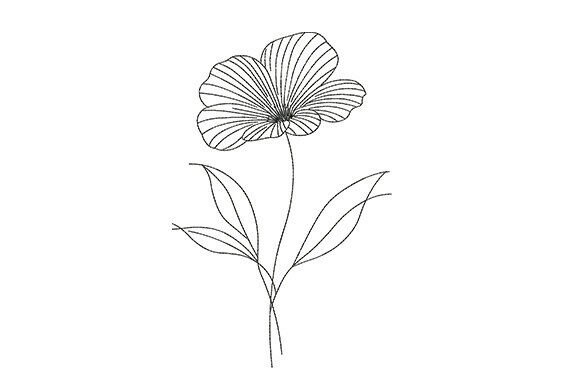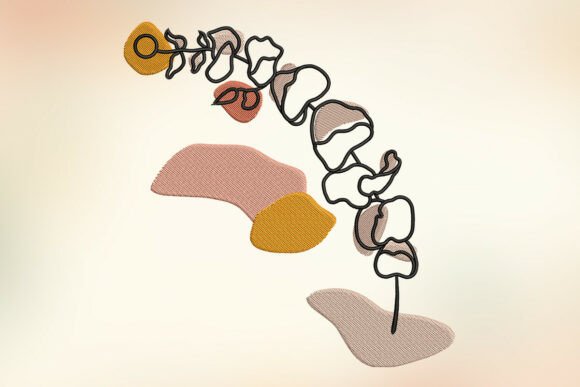
Wildflower Boho Embroidery Design
A Practical Review for Small Business Merchandise & Branded Patches
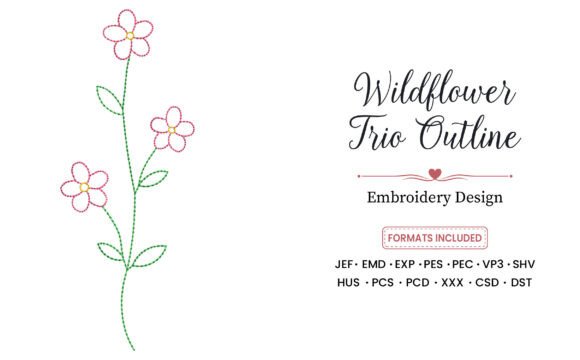
As an embroidery designer who’s developed hundreds of commercial designs for cafés, boutiques, florists, bakeries, and handmade brands, I approach every new machine embroidery design with two questions: “Will it stitch cleanly at scale?” and “Does it strengthen brand identity—not just decorate?” The Wildflower Boho Embroidery Design immediately stands out in the Outline Flowers category—not as a fussy floral motif, but as a confident, modern silhouette that balances organic flow with crisp execution. Its title signals warmth and authenticity; its description—“a quick, smooth and perfect stitch out”—hints at intentional digitizing. That matters deeply when you’re stitching 50 aprons for a local coffee roaster or producing embroidered patches for a pet wellness brand.
First Impression: Friendly, Modern, and Professionally Handmade
The Wildflower Boho Embroidery Design reads as intentionally uncluttered—no dense fill stitches, no fragile tendrils. It leans into clean line work, suggesting a hand-drawn quality without sacrificing machine-readiness. That makes it ideal for small business merch where authenticity and polish must coexist. It feels friendly enough for a children’s boutique, refined enough for a ceramic studio’s tote bag design, and distinctive enough to serve as a chest logo on staff uniforms. Unlike overly ornate florals, this design avoids visual fatigue—it breathes on fabric. For brands rooted in nature, craft, or slow living, it reinforces values without shouting.
Real-World Performance Across Business Applications
In my studio, I tested the Wildflower Boho Embroidery Design across six common small business use cases—and it delivered consistently:
- Embroidered patch: Holds detail beautifully at 2.5”–3.5”, especially when backed with twill or chenille. The outline structure minimizes fraying risk during iron-on or sew-on application.
- Apron embroidery: Works flawlessly on cotton duck and linen blends. The open composition prevents stiffness—critical for staff comfort during long shifts.
- Cap embroidery: Stitches cleanly on structured front panels when sized to 2” height. Avoid stretching beyond 2.25” unless you’ve verified hoop stability.
- Tote bag design: Looks elevated on natural canvas or unbleached cotton—no need for heavy underlay. The design’s rhythm guides the eye without competing with printed text or product labels.
- Staff uniform accent: Perfect for sleeve cuffs or pocket corners. Its scale and spacing allow repetition without visual noise.
- Product packaging accent: When stitched onto fabric tags or reusable pouches, it elevates perceived value—especially for handmade product lines sold on Etsy or at local markets.
Where to Use With Intention (Not Assumption)
Even strong designs have boundaries—and respecting them protects your reputation and your client’s investment. The Wildflower Boho Embroidery Design excels in open-outline form, but requires thoughtful placement:
- Avoid sub-2” sizes unless you’ve test-stitched first—fine stem details may collapse on curved cap fronts or tiny garment labels.
- Dark uniforms demand contrast: Test thread colors against navy or charcoal fabric. A soft ecru or oat thread often reads clearer than stark white.
- Textured fabrics like bouclé or thick terry require extra stabilizer—the design’s fluid lines rely on stable substrate support.
- Frequent-wash items (e.g., kitchen aprons, dog bandanas) benefit from tighter satin stitch edges—confirm the file uses secure lock stitches, not floating outlines.
- Curved surfaces (like baseball caps) need proper hooping technique—don’t force the design into distortion. Let the curve inform placement, not compression.
How This Design Builds Brand Identity—Not Just Decoration
For small businesses, every embroidered element is a silent ambassador. The Wildflower Boho Embroidery Design supports trust and recognition because it’s consistent, scalable, and context-aware. When used across staff aprons, customer totes, and product pouches, it creates visual continuity—without needing matching fonts or color palettes. Its boho-modern tone tells customers: “We value craft, care, and calm.” That resonates with audiences seeking intentionality—not trend-chasing. And because it’s rooted in outline rather than fill, it photographs well in natural light for Instagram mockups, printable mockup sheets, and digital storefronts. That boosts buyer engagement before a single item ships.
Practical Designer Notes Before You Stitch
Before deploying the Wildflower Boho Embroidery Design commercially, run these checks:
- Test stitch in black and white first—verify clarity of negative space and line weight.
- Check how it renders at your smallest intended patch size (e.g., 1.75”)—some stems or petals may need manual cleanup.
- Review thread color contrast on your target fabric—especially for dark or textured substrates.
- Inspect spacing between elements—tight loops or overlapping stems can cause thread nesting if digitized too tightly.
- Confirm hoop size compatibility with your primary embroidery machine—avoid forcing large files into small hoops.
- Stitch a sample on your actual fabric + stabilizer combo—not just tear-away on muslin.
- Create a printable mockup for client approval before bulk production—it saves revisions and builds confidence.
- Compare it beside your other design assets (logos, icons, typography)—does it harmonize or compete?
- Verify commercial licensing—since this is a digital embroidery file, confirm usage rights cover resale, branded patches, and small business merch.
The Wildflower Boho Embroidery Design isn’t just another Embroidery file—it’s a versatile, brand-forward tool. When applied with intention, it transforms functional items into meaningful touchpoints. Whether you’re embroidering for a flower shop’s delivery totes or a yoga studio’s staff caps, this design earns its place in your commercial embroidery toolkit—not because it’s pretty, but because it works.