Scandinavian Floral Folk
A Designer’s First Look: Playful, Rooted, and Ready for Real Projects
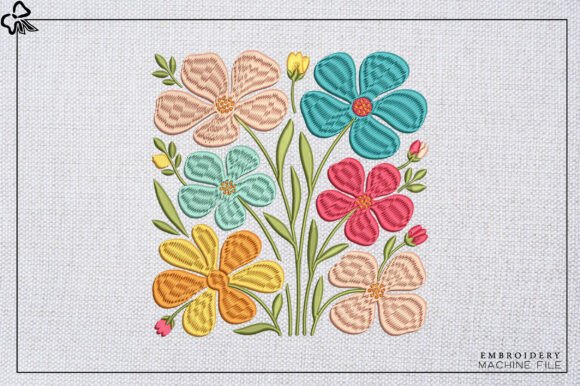
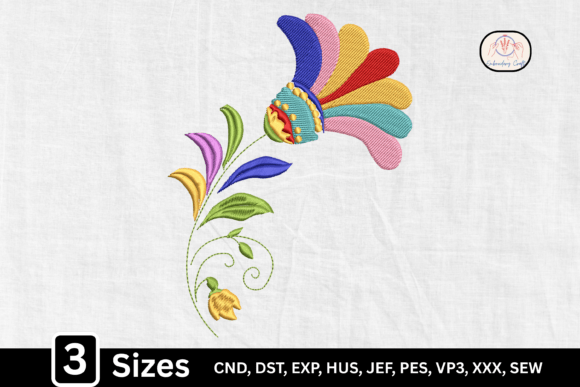
When I opened Scandinavian Floral Folk for the first time, I didn’t see just another floral embroidery file—I saw a mood. Bright but grounded, folk-inspired but clean, whimsical without tipping into clutter. It’s not a botanical study or a hyper-realistic bloom; it’s a stylized, rhythmic arrangement of stems, petals, and leaves that feels hand-drawn yet machine-precise. The layout leans slightly asymmetrical—organic, not rigid—and the balance between open space and stitch density suggests it’ll breathe well on fabric, not overwhelm it. As a designer who regularly selects embroidery files for client work and small-batch production, I immediately pictured it stitched onto a natural linen tea towel for a boutique kitchen line—or centered on a cream cotton tote bag for a local craft fair.
Where It Shines: Real Use Cases That Feel Authentic
I tested Scandinavian Floral Folk across three real project types: a custom embroidered sweatshirt for a small-town florist’s staff, a set of baby onesies for a handmade shop, and a series of iron-on patches for a textile artist’s limited-run aprons. In each case, the design held up—not because it’s “perfect,” but because its personality matches the context. On the sweatshirt, the folk energy softened the garment’s sporty weight; on the onesies, its gentle scale and rounded shapes felt nurturing without being cutesy; and as a patch, the clean outer edge and consistent satin-stitch outlines made it easy to trim and fuse cleanly.
It works especially well for custom apparel, tote bag design, pillow covers, and holiday embroidery—think spring baby showers, Midsummer-themed gifts, or Scandinavian-inspired nursery decor. For Etsy sellers and small shop products, this isn’t background filler—it’s a signature touch. Customers notice it. They pause. They say, “That’s different.” That kind of quiet recognition builds trust in your handmade product and strengthens brand consistency.
Where to Proceed with Care
Like any strong design, Scandinavian Floral Folk has boundaries—and respecting them is where professional judgment matters. Its charm lies partly in fine details: slender stems, petal tips, and subtle leaf veining. That means it’s not ideal for very small hoop sizes (under 4" x 4") unless you’re willing to simplify or resize thoughtfully. On textured fabrics like bouclé or heavy terry cloth, some delicate lines may blur—so test first. On thin or stretchy fabric (think rayon challis or lightweight knits), stabilizer choice becomes non-negotiable: medium-weight cutaway or tear-away, layered if needed.
Dark fabric demands attention too. The original color palette reads vibrant on light backgrounds—but on charcoal or navy, lighter thread colors (cream, pale yellow, soft sage) will preserve clarity better than white alone. And while it’s lovely on flat surfaces, avoid placing it near curved seams or deep darts (like the crown of a cap) unless you’ve verified how the stitch layout handles distortion. This isn’t a fault—it’s a reminder that machine embroidery design is always a conversation between file, fabric, and form.
What It Adds Beyond Aesthetics
Scandinavian Floral Folk elevates more than just appearance—it affects perception. Stitched cleanly on an organic cotton apron, it signals intentionality. On a personalized gift, it says “I chose something meaningful, not mass-produced.” For a craft business, it adds visual distinction in crowded digital spaces—especially when used in a printable mockup that shows texture, drape, and scale accurately. Buyers engage more deeply when they can imagine the item in their own life—and this design invites that imagination without shouting.
It also supports commercial embroidery viability. Because it avoids excessive fill stitch density and maintains clear negative space, it stitches efficiently on multi-needle machines and holds up through repeated washes—critical for baby items or kitchen textiles. That durability translates directly to customer satisfaction and fewer returns.
Practical Designer Notes Before You Stitch
- Always test on scrap fabric—same type, same stabilizer, same thread brand—as your final project.
- Review stitch density visually in your embroidery software. If fill areas look overly dense or thin, adjust underlay or reduce density slightly before stitching.
- Confirm hoop size compatibility. If you’re working with smaller hoops, check whether key elements (like the central bloom or longest stem) fit comfortably within the stitching area.
- Inspect small details at 200% zoom: are petal edges crisp? Do fine stems disappear at low resolution? If so, consider slight enlargement or manual cleanup.
- Test black-and-white mockups—they reveal contrast issues faster than color previews.
- Compare light and dark fabric backgrounds in your design software or physical swatches. Some thread colors flatter one base more than the other.
- Use proper stabilizer: medium cutaway for knits, tear-away for stable wovens, and optional topping for napped fabrics.
- Verify licensing before selling finished items or bundling the digital embroidery file with other design assets. When in doubt, contact the creator.
Final Thought: Not Just a Flower—A Design Decision
Scandinavian Floral Folk isn’t filler. It’s a considered choice—one that brings warmth, cultural resonance, and quiet confidence to embroidery projects that aim to feel both personal and polished. Whether you’re an Etsy seller building a seasonal collection, a small shop owner curating boutique merchandise, or a creative entrepreneur developing branded personalized gifts, this design earns its place by balancing artistry with practicality. It doesn’t ask to be the only thing on the garment—it asks to belong there. And in handmade work, that sense of belonging is everything.