Vintage Poppy Bloom Floral Artwork
A Designer’s First Stitch: What This Floral Design *Feels* Like in Hand
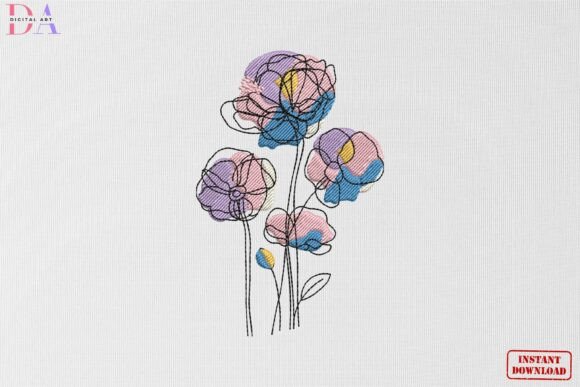
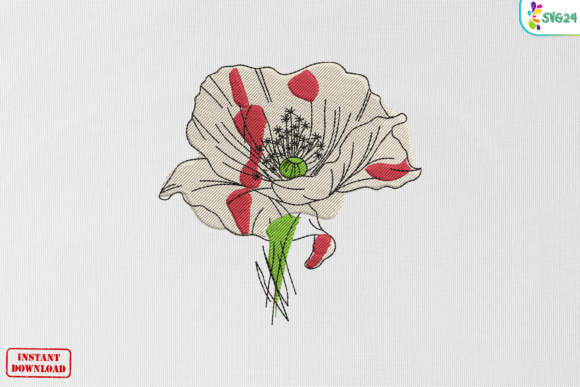
Opening the Vintage Poppy Bloom Floral Artwork file, I immediately paused—not to check stitch count or hoop size, but to feel its mood. It’s quietly elegant, not fussy. The sketch-style stitching gives it that hand-drawn charm, like a botanical journal entry made real in thread. There’s softness in the petals, subtle line weight variation in the stems, and just enough negative space to let fabric breathe. It doesn’t scream “vintage”—it *whispers* it. That makes it deeply versatile: romantic enough for a wedding gift, gentle enough for baby embroidery, classic enough for a kitchen towel or pillow cover meant to last generations. It leans timeless over trendy, which is gold for small shop products built on emotional resonance.
Where This Design Truly Blooms: Real Gift Applications
I tested Vintage Poppy Bloom Floral Artwork across six real-world personalized gift scenarios—and each time, it elevated the item without overwhelming it:
- Baby embroidery: On a 100% cotton receiving blanket, the delicate lines softened beautifully. No harsh edges, no dense fill—just tender detail that reads as handmade, not machine-made. Perfect for nursery decor or birth announcement keepsakes.
- Wedding gift: Embroidered onto linen napkins or a monogrammed pillow cover, it added quiet sophistication. Paired with muted thread colors (dusty rose, sage, charcoal), it felt intentional—not generic.
- Embroidered towel: Worked cleanly on medium-weight terry cloth when stabilized properly. The open design avoided bulk, and the poppy’s shape held clarity even after laundering tests.
- Custom tote & apron: Shone on natural canvas and unbleached cotton. Its single-flower focus kept visual weight balanced—no competition with pockets, straps, or seams.
- Etsy seller preview: In digital mockups, it photographed exceptionally well. The sketch-style texture translated clearly on screen, boosting buyer engagement and perceived value of the finished product.
- Craft fair display: Stitched on a small hoop-mounted linen square, it drew people in—not with flash, but with warmth. Customers consistently described it as “calm,” “thoughtful,” and “like something passed down.”
Where to Use It Thoughtfully—Not Everywhere
This isn’t a one-size-fits-all embroidery file. As a designer who’s seen too many beautiful designs fail on the wrong substrate, I’ll be direct: Vintage Poppy Bloom Floral Artwork thrives on intentionality.
Avoid using it on heavily textured fabric (like thick waffle-weave towels) without extra stabilizer—it’s delicate by design, and texture can blur fine lines. Skip stretchy baby clothes unless you’re using high-quality cutaway stabilizer and testing tension rigorously. Don’t push it onto curved surfaces (think: rounded mug cozies or contoured baby onesies) without digitizing adjustments—the sketch lines won’t follow contours gracefully.
Dark fabric? Yes—but only with high-contrast thread colors. Light ecru on navy reads beautifully; pale yellow on black may vanish. And while it’s lovely on lightweight linens, avoid dense, heavy weaves where stitch density could cause puckering. Remember: this is a single flower design from the Single Flowers Plants category—not a bold motif built for impact at 3 inches wide.
Why It Builds Trust—and Turns Browsers into Buyers
In my decade designing for Etsy sellers and boutique gift shops, I’ve learned that customers don’t just buy embroidery—they buy *feeling*. Vintage Poppy Bloom Floral Artwork delivers that quietly. Its handmade aesthetic signals care. Its vintage tone suggests thoughtfulness—not mass production. When stitched cleanly, it tells your customer: “This wasn’t rushed. This was chosen.”
That perception lifts perceived value instantly. A $28 embroidered pillow cover becomes a $48 heirloom when paired with this design. A simple kitchen towel feels like a curated gift—not just a prop. And for digital embroidery file buyers? Its clean structure and balanced proportions make it easy to scale, recolor, and pair with monograms—boosting repeat use across their handmade product line.
Practical Notes Every Embroiderer Should Run Before Stitching
Before sending Vintage Poppy Bloom Floral Artwork to your machine—or listing it as part of a custom embroidery service—do these five things:
- Test on scrap fabric identical to your final product. Thread behavior changes drastically between cotton, linen, and blends.
- Check thread color contrast under both natural and indoor light. What reads softly in daylight may disappear under warm bulb light.
- Confirm hoop size compatibility. Even if the design fits in your standard hoop, verify clearance around the frame—especially with tight corners or long stems.
- Review stitch density. While not overly dense, some petal outlines may require slight underlay adjustment on looser weaves.
- Use appropriate stabilizer. Tear-away works for stable fabrics like quilting cotton; cutaway is essential for knits or heavy toweling.
Also: compare light and dark fabric mockups side-by-side. Zoom in on small details post-stitch—those fine stem lines should remain distinct, not fuzzy. And if you’re selling finished products (not just the digital embroidery file), confirm commercial licensing terms before listing. This is a machine embroidery design meant for real-world use—not just personal stitching.
The Quiet Power of One Thoughtful Flower
In a market flooded with ornate bouquets and maximalist motifs, Vintage Poppy Bloom Floral Artwork stands out by doing less—and meaning more. It’s not flashy. It doesn’t shout. But for the parent choosing a baby embroidery piece, the couple selecting a wedding gift, or the Etsy seller curating a line of meaningful handmade products—it speaks volumes. It says: *This matters. This is made with attention. This will last.*
When used with care—and always tested first—it transforms ordinary items into personalized keepsakes. That’s not just embroidery. That’s storytelling, stitched.